
How robots earn a score
Where the data comes from
I compare robot vacuums on paper and don’t run them myself. Six kinds of sources feed the pages, and each one answers a different question.
| Source | Settles | Seen in |
|---|---|---|
| Brand page or manual | Claimed specs, what is in the box | Spec tables, marked as claimed |
| Brand checkout | The price before tax | Price lines, with a date |
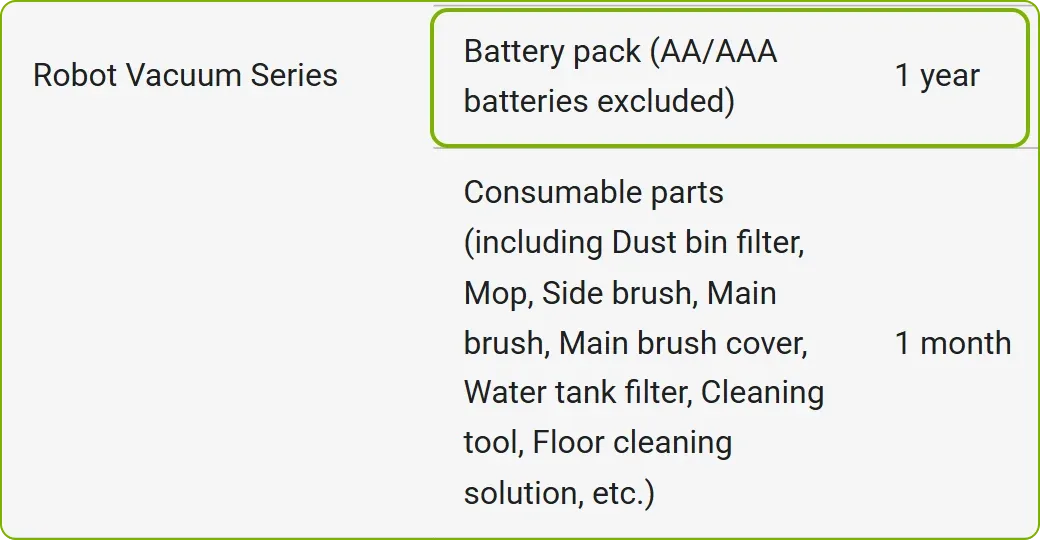
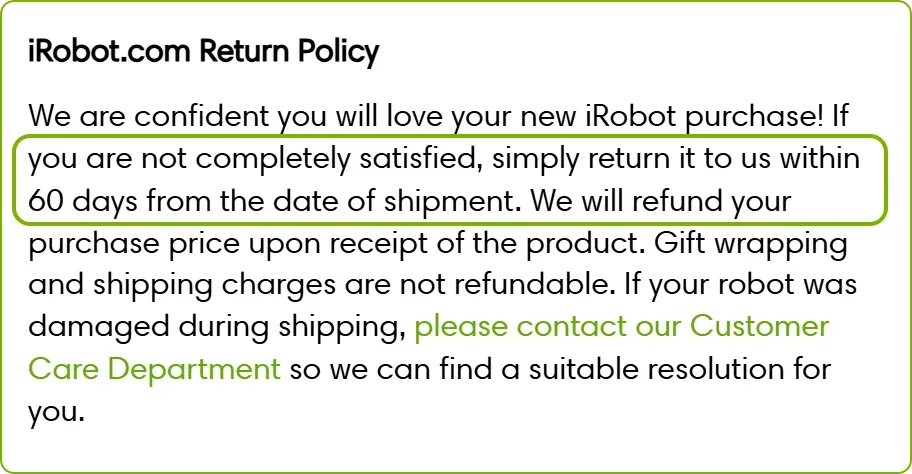
| Warranty and return policy | Years covered, days to return | Review tables |
| CPSC recall search | Safety notices | Recall line on each review |
| Lab or test channel | Pickup, carpet, obstacles, noise | Measured tables, with the name |
| Owner reviews | Breakdowns after months of use | Owner sections |
The lab results come mostly from Vacuum Wars, with a few from RTINGS, Vacuum Chef and TechGearLab. The brand material looks like this.
How I verify
Each number on a page has a source and the date I read it. Prices come from the store’s own page or cart, for the exact bundle named: robot only, robot with an emptying dock, or robot with a washing station. Discount codes that work for one shopper are left out.
When two sources disagree, both stay. A brand may claim one step height and a lab may record another, and the page shows the pair instead of an average. If a figure can’t be found, the cell reads “not measured” or “not published.”
How I rate
Five parts, weighed equally. The table is the whole formula.
| Part | Full (2) | Middle (1.75) | Low (1.5) |
|---|---|---|---|
| Safety | No CPSC recall for the model | — | A CPSC recall for the model |
| Specs | Suction, run time and bin or bag size all published | Two of the three | One or none |
| Price | At or under the median for its class (robot only, or robot with dock) | Up to 1.5 times the median; with no current price the part is left out and the other four carry its weight | More |
| Warranty & returns | Warranty at least the class median and 30+ days to return | One of the two | Neither |
| Owner reviews | Mostly praise on an independent store with 25+ ratings averaging 4.3+ | Mixed, few ratings, or not yet tallied | Repeated breakdown complaints |
“Class” means one of two groups: robots that only charge, and robots sold with an emptying or washing dock. A dock adds cost, so a bare robot is never priced against a full station. The median is the middle price or warranty in that group, and it moves when the catalog does.
Two parts need a note. Owner reviews have been counted for a minority of models so far. The rest sit on the middle step until they are counted, so a missing tally neither helps nor hurts. And a robot that is out of stock keeps its score, based on the last price its brand showed. Once a model is gone for good, it moves to shelved robots without a score.
| Total | Word on the page |
|---|---|
| 9.5 and up | Outstanding |
| 9 to 9.49 | Excellent |
| 8.5 to 8.99 | Very good |
| 8 to 8.49 | Good |
| 7.5 to 7.99 | Decent |
What affects rankings and what doesn’t
A robot’s score and its place on a list are two different things. The score follows the table above. Checked items below move it, crossed ones don’t.
- A recall found in the CPSC search
- A price change at the brand’s store
- A longer or shorter warranty
- A spec the brand starts to publish
- Who makes the robot
- Where the store button leads
- Suction alone, however large the claim
- A brand asking for a better score
The order of a list has its own rules:
- Robots whose store we link to come first. iRobot, Ecovacs, Eufy and Shark robots follow, even with a higher score. A list that mixes the two says so at the top.
- A page about one job goes by the evidence for that job and names it, for example hair pickup with the lab’s name. The score stands beside it for reference.
- The main list is ten robots with a mop-washing dock and at least 30,000 Pa of claimed suction, led by the best score among those we link to. It isn’t the whole catalog in score order, so a higher score can be missing from it.
- Brand pages run in score order.
A robot that can’t do the job, such as one without a mop on a mopping list, isn’t there at all.
Evidence levels
Not every sentence weighs the same, so the wording tells you what stands behind it.
| You read | It means |
|---|---|
| “Claims,” “rated at” | The brand’s own figure |
| “Measured by …” | A named lab or channel recorded it |
| “Owners report” | Several buyers describe the same thing |
| “Not measured” | No published result found |
Updates
Prices are read again before a page changes, and the date beside the number is the day it was read. If a model drops out of its brand’s store, the page points to a current robot in its place. Recall searches have their own date. The latest results are on recalls and batteries.
Corrections
If a figure is wrong, send the page, the line and a link to a better source through the contact page. A correction goes into the data file, and every table that reads from it follows. A brand that disagrees with a score goes through the same steps as a reader.
How to cite this data
The numbers behind the comparison tool can be downloaded there as CSV files. Use them with credit: name RobotVacuumFit, link to the page you took the figure from and keep the date that stands next to it. A price without its date can mislead people within a week.